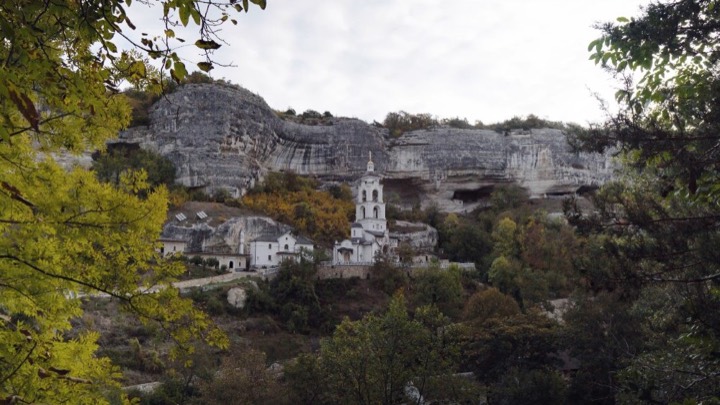
Chufut-Kale, the Cave Town
Perched on a limestone plateau, Chufut-Kale is a cave town of rock-hewn rooms, cisterns and defensive walls, long associated with the Karaite community of Crimea.
View details →

Kremlins, frontier fortresses, imperial estates and historic towns of Russia and Crimea: the Moscow and Kazan Kremlins, Ivangorod, Izborsk, Koporye, Kuskovo, Tsaritsyno and Gatchina.
20 programs
Perched on a limestone plateau, Chufut-Kale is a cave town of rock-hewn rooms, cisterns and defensive walls, long associated with the Karaite community of Crimea.
View details →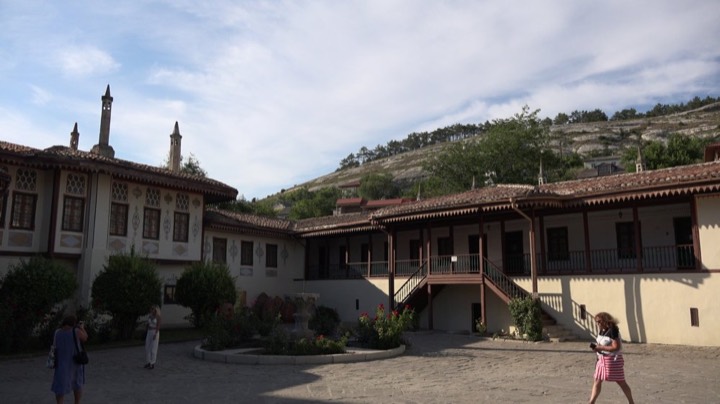
Courtyards, painted ceilings, stained glass and gardens: the Khan's Palace was the seat of the Crimean khanate, and remains the fullest surviving image of its court culture.
View details →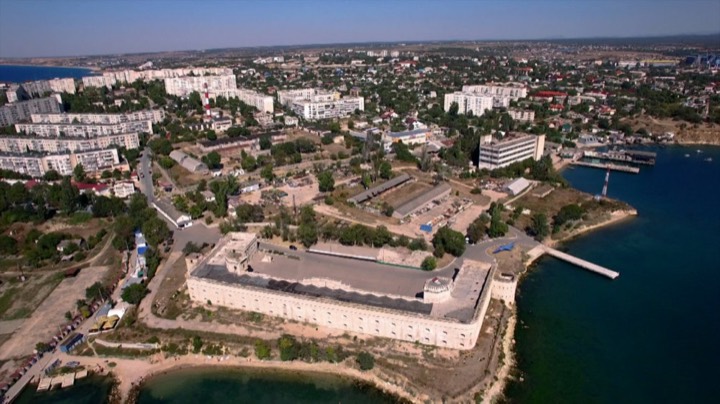
Built to command the approaches to Sevastopol, this stone coastal battery of vaulted casemates and gun embrasures now houses a museum devoted to the wars fought over the bay.
View details →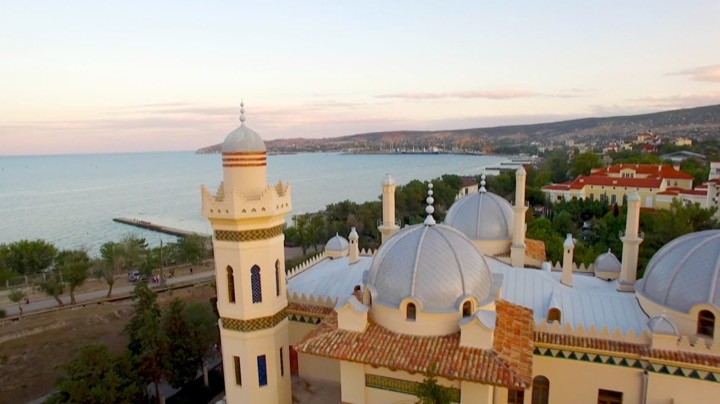
Domes, horseshoe arches and terraces facing the sea: the Stamboli villa is a showpiece of early twentieth-century resort architecture on the Crimean coast.
View details →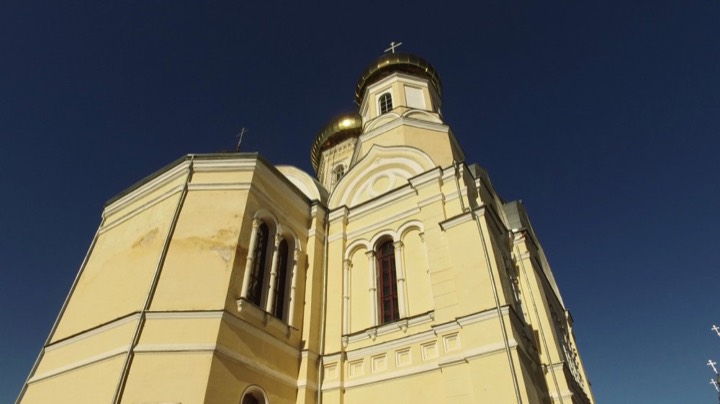
Founded by Greek colonists near the mouth of the Don, Tanais was the northernmost outpost of the Hellenic world and a trading point with the nomads of the steppe. Its excavated streets and defences form one of Russia's major archaeological reserves.
View details →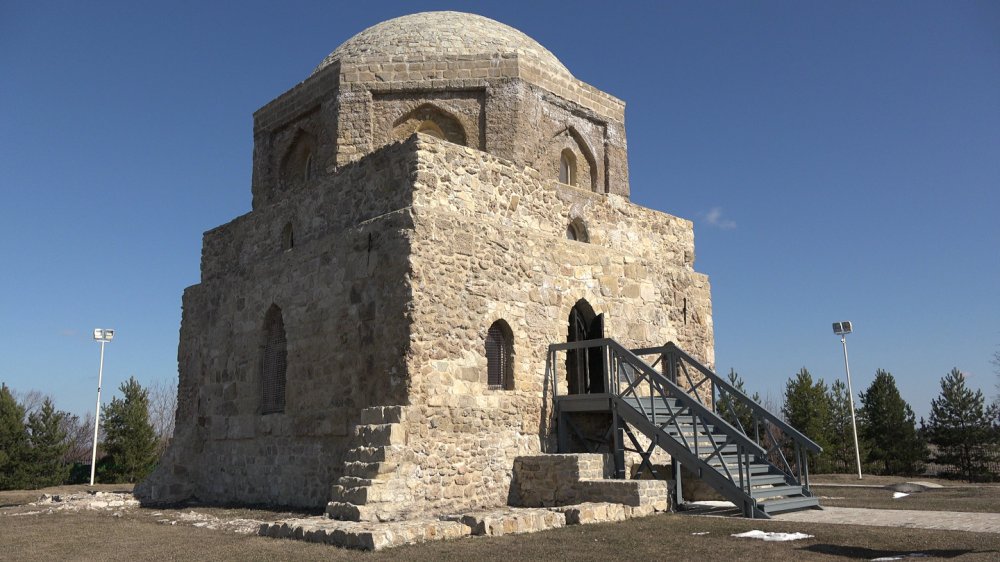
On the banks of the Volga in Tatarstan, the archaeological complex of Bolgar preserves the remains of the capital of Volga Bulgaria, whose rulers adopted Islam in the tenth century. The site is inscribed on the UNESCO World Heritage List.
View details →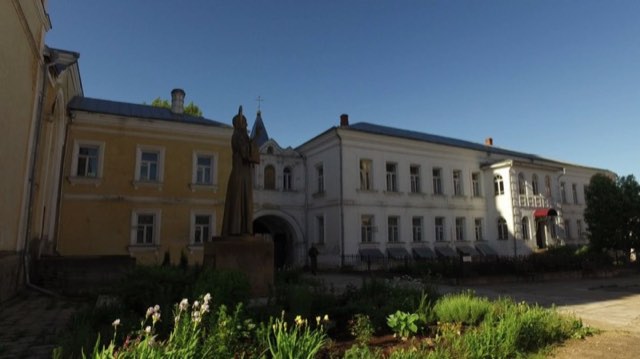
Capital citadel of Tatarstan, the Kazan Kremlin encloses within its white limestone walls the Qol Sharif Mosque, the Annunciation Cathedral and the leaning Söyembikä Tower. A UNESCO World Heritage site where two civilisations occupy one enclosure.
View details →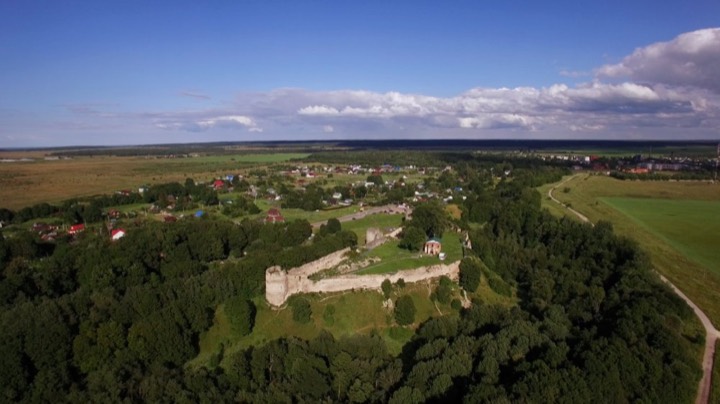
West of Saint Petersburg, the stone fortress of Koporye rises on a rocky outcrop above a ravine. Founded by the Teutonic Knights in the 13th century and long held by Novgorod, its towers and curtain walls survive as a striking ruin.
View details →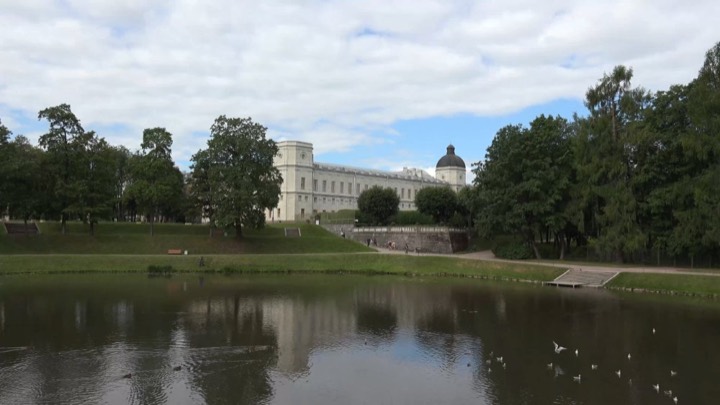
South of Saint Petersburg, Gatchina Palace was built by Antonio Rinaldi for Count Grigory Orlov and became the favoured residence of Emperor Paul I. Its austere stone facades, parade ground and vast lake park set it apart from the imperial suburbs.
View details →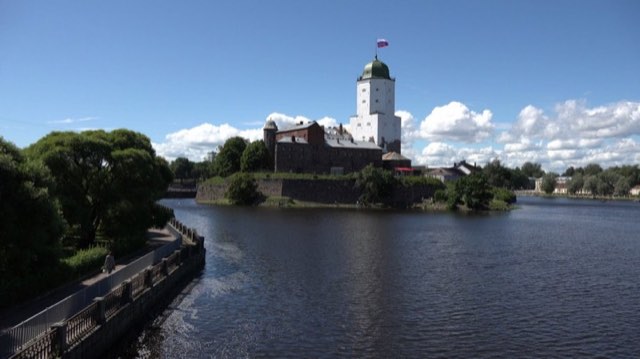
Built in 1492 on the orders of Ivan III, Ivangorod Fortress faces the castle of Narva across the river. Nowhere else in Europe do two medieval strongholds confront each other so directly, one on each side of a modern border.
View details →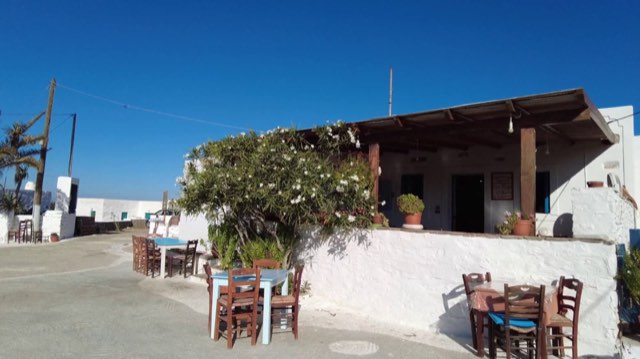
In the Pskov region, the medieval stone fortress of Izborsk crowns a hill above a valley of springs and lakes. Its massive towers and walls, blackened by weather, mark one of the earliest recorded settlements in the Russian north-west.
View details →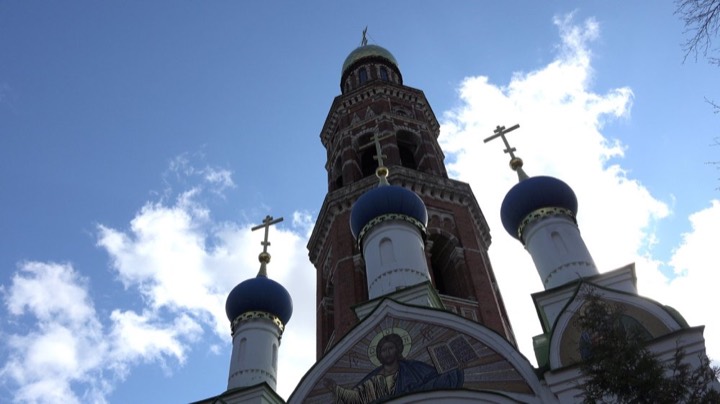
On an island in the Vuoksi River at Priozersk, Korela Fortress guarded the route between the Gulf of Finland and Lake Ladoga. Swedish, Finnish and Russian in turn, it is now a museum within its earth and stone defences.
View details →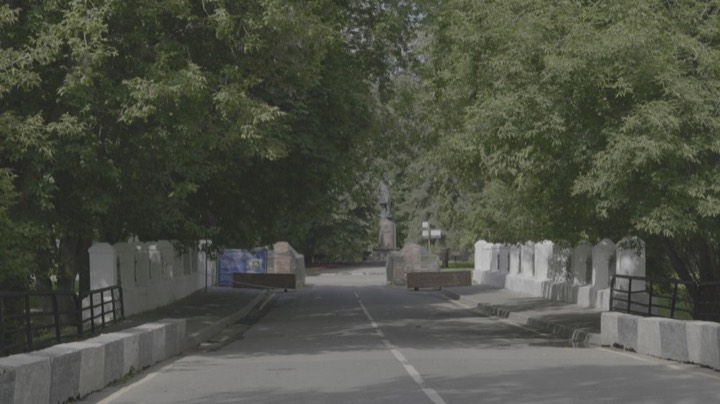
Built by the Sheremetev family as a summer residence, Kuskovo pairs a wooden palace with a formal French garden, pavilions, a grotto and an orangery. One of the most complete 18th-century estate ensembles preserved in Moscow.
View details →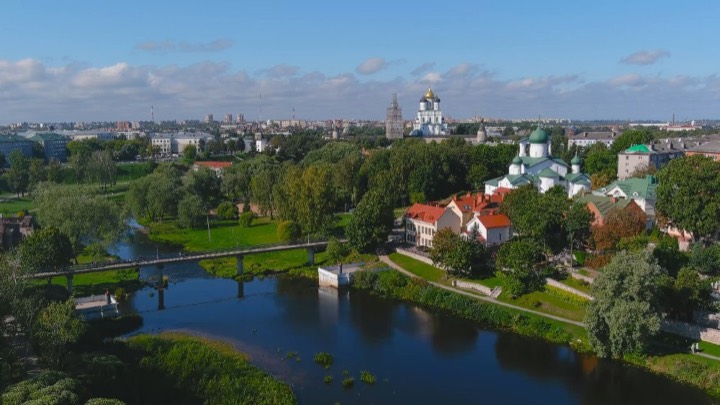
On the Velikaya River, Pskov is one of the oldest cities in Russia and the home of a distinctive architectural school. Its whitewashed churches with their squat domes and open belfries are inscribed on the UNESCO World Heritage List.
View details →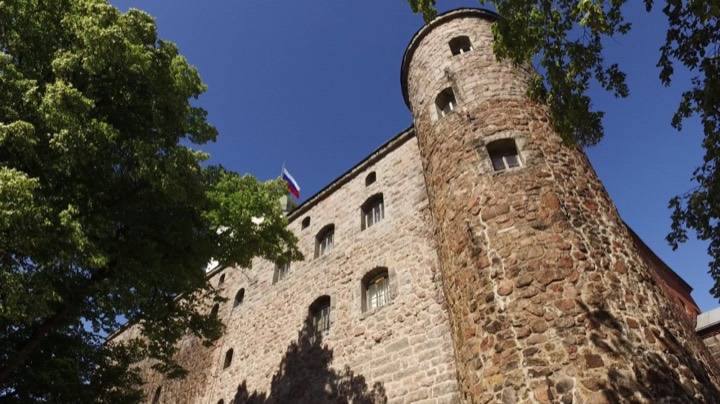
At the confluence of the Velikaya and the Pskova, the Krom is the fortified heart of Pskov. Behind its long white walls rises the Trinity Cathedral, seat of authority in a city that governed itself for centuries.
View details →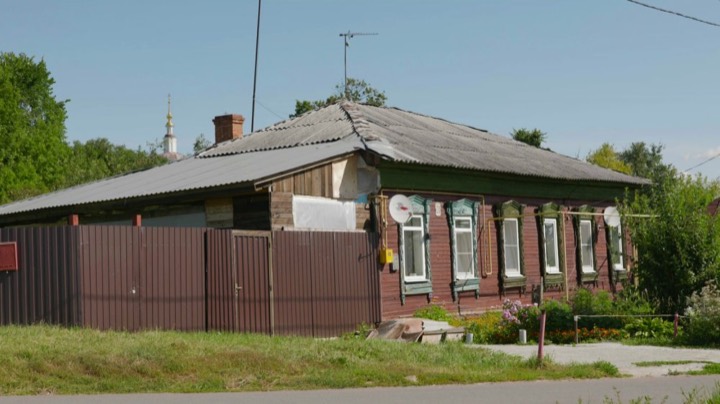
South of Moscow, only fragments remain of the white-stone kremlin of Serpukhov. On its cathedral hill, a stretch of wall and the surviving churches recall a fortress that once guarded the southern approach to the capital.
View details →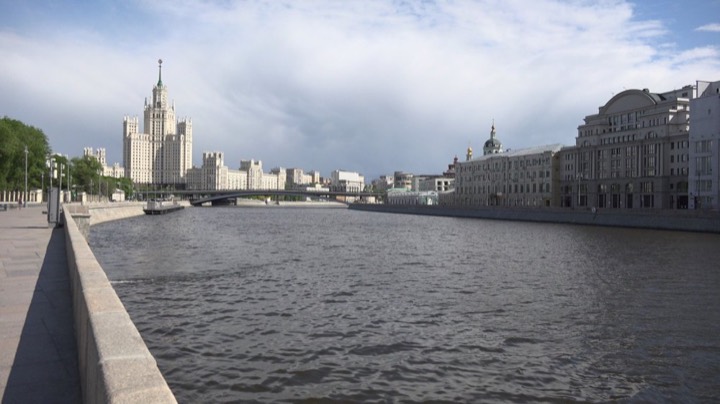
Behind its red brick walls and towers, rebuilt in the late 15th century by Italian architects, the Moscow Kremlin encloses Cathedral Square, the Ivan the Great Bell Tower and the palaces of Russian power. A UNESCO World Heritage site.
View details →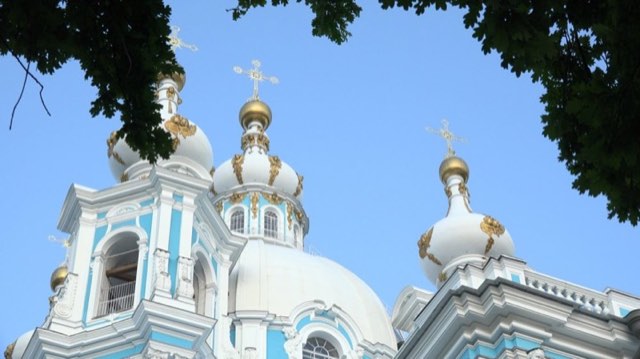
Commissioned by Catherine the Great and designed by Vasily Bazhenov, then continued by Matvei Kazakov, the Tsaritsyno estate south of Moscow is a Gothic-revival fantasy in red brick and white stone, left unfinished for two centuries.
View details →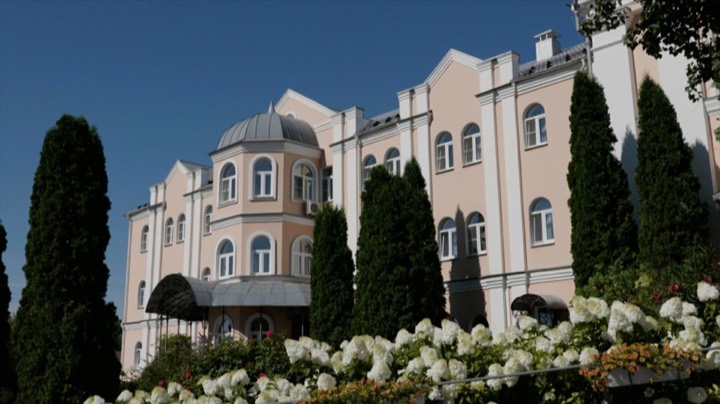
On the Voronezh River in Russia's black-earth south, Voronezh is remembered as the place where Peter the Great had the ships of his first fleet built. Today it is a large regional capital rebuilt after the destruction of the Second World War.
View details →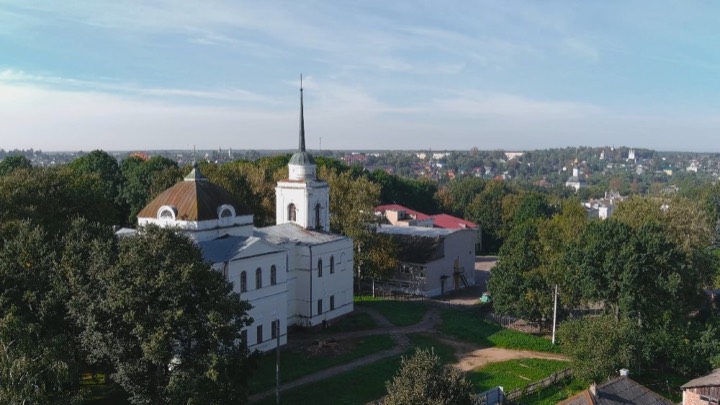
Vyazma grew up on the historic route linking Moscow to Smolensk, a position that brought it trade, garrisons and repeated destruction. Churches, monastery walls and a rebuilt town centre trace a settlement that has learned to reconstruct itself.
View details →Tell us about your platform and your territories. Our sales team replies within one business day, with screeners and a proposal.
Contact