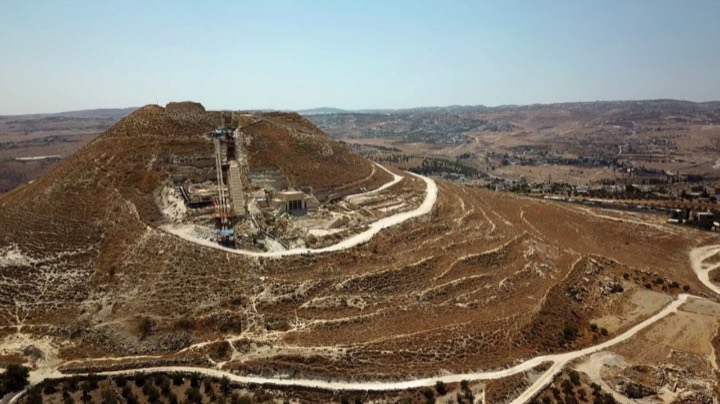

Herodion is unmistakable — a smooth, artificial-looking cone rising above the terraced hills southeast of Bethlehem, engineered to be seen from a distance and to look out over the desert edge. Herod the Great built here a combined palace and fortress, with a circular enclosure, projecting towers, a bathhouse, cisterns and living quarters, and at the foot of the hill a lower complex with pools and gardens supplied by a long water system. It is one of the clearest surviving statements of Herodian ambition: architecture as a demonstration of power over both landscape and water. The site also carries later layers, including tunnels cut through the hill by insurgents during a subsequent Jewish revolt against Rome, and the excavation campaigns led by the archaeologist Ehud Netzer, who identified a monumental tomb on the slope and argued that it belonged to Herod himself — a claim that has been debated since. The film exploits the site's geometry with aerial photography, and its interiors with the descent into vaulted cisterns and cut passages beneath the summit.