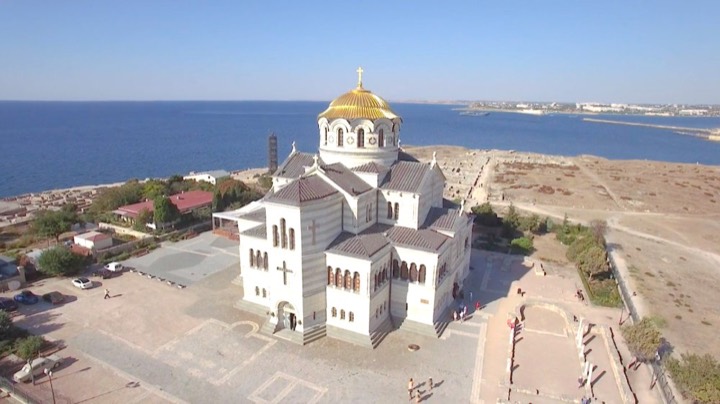

Tauric Chersonesos was founded by Greek settlers on the Black Sea shore of the Crimean peninsula and remained inhabited for nearly two thousand years, passing through Hellenistic, Roman and Byzantine periods before its abandonment. The site, with the agricultural territory that supplied it, is inscribed on the UNESCO World Heritage List. What survives is unusually legible for a general audience: the grid of streets, the line of the defensive walls, the remains of an ancient theatre, dwellings, workshops, and the columns of an early Christian basilica standing against the open sea, one of the most photographed archaeological images of the region. The episode follows the long chronology through the stones themselves, showing how a Greek colonial city was planned, how Roman and then Byzantine occupants adapted it, and how excavation continues to read a settlement at the meeting point of the classical world and the steppe.