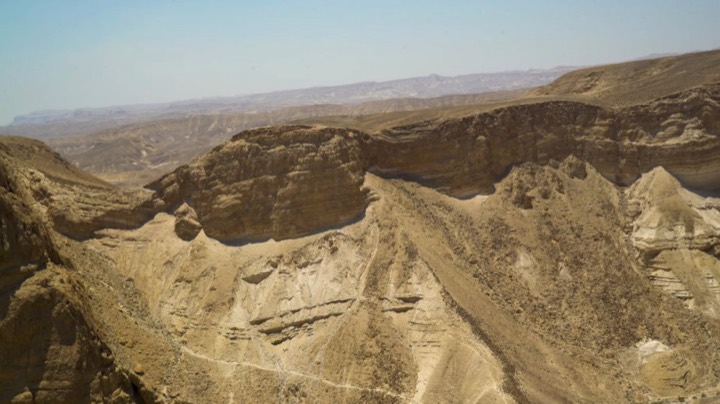

Masada is a natural fortress: a flat-topped rock rising sheer above the western shore of the Dead Sea, isolated on all sides by cliffs. Herod the Great turned it into a palace-stronghold, with storehouses, a bathhouse, vast cisterns cut into the rock and, most remarkably, a palace built on three terraces stepping down the northern cliff face, hanging above the void. Its water system, filled from flash floods channelled off the surrounding slopes, made a self-sufficient life possible on a summit in one of the driest places on earth. Masada is best known as the site of the siege at the end of the Great Revolt against Rome, an episode recounted by Flavius Josephus and materially preserved in the landscape: the encircling wall, the outlines of the Roman camps and the great assault ramp are all still legible from the summit, a rare survival of an ancient battlefield. Inscribed on the UNESCO World Heritage List, and reached at dawn by climbers on the Snake Path, it offers exceptional aerial and sunrise photography and remains one of the region's flagship heritage titles.