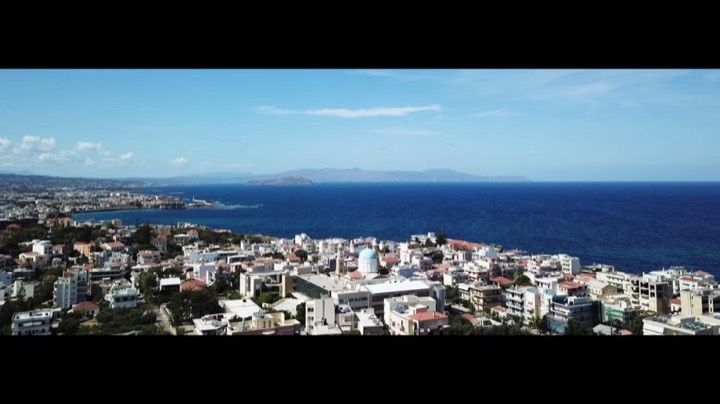

The monastery of Agia Triada Tzagaroli occupies a wide, sunlit plateau on the Akrotiri peninsula, east of Chania in western Crete. Founded by members of a Venetian-Cretan family during the period when the island was ruled from Venice, it was built with a strong Italian Renaissance accent: a monumental gateway, a church front with columns and pediment, an arcaded courtyard organised with an almost civic sense of order. That architectural crossing - Orthodox liturgy inside a Renaissance envelope - is the hallmark of Cretan monasticism in this period. Agia Triada is also an estate. Olive groves and vineyards spread out around the walls, and the community continues to press oil, make wine and keep bees, selling what it produces. The film follows both registers: the ochre facades and the light of the courtyard, the library and the icons, and then the agricultural year outside the gates. It is a portrait of a monastery that has never separated its spiritual life from the land that supports it.