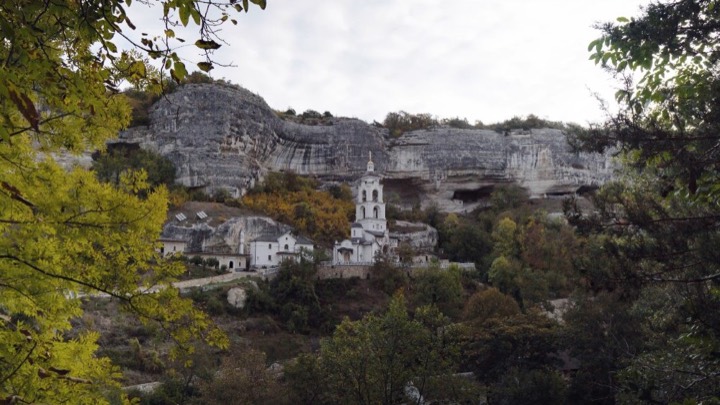

Chufut-Kale occupies a limestone plateau that drops away in cliffs on almost every side, an obvious refuge and an obvious stronghold. Over a long history it served as a fortified settlement, cut and built at once: chambers, stores, stables and cisterns hollowed directly into the rock, connected to masonry houses, defensive walls and gates that closed the only practicable approaches. The site is closely associated with the Karaite community, which lived here and left its prayer houses and cemetery, and it stands within sight of Bakhchisaray, the later seat of the Crimean khans. Today the plateau is empty of inhabitants, and that emptiness is the film's subject: wind, stone, worn thresholds and cart ruts, the view over the surrounding valleys, and the archaeological reading of how people organised a life at altitude, in caves, behind walls.