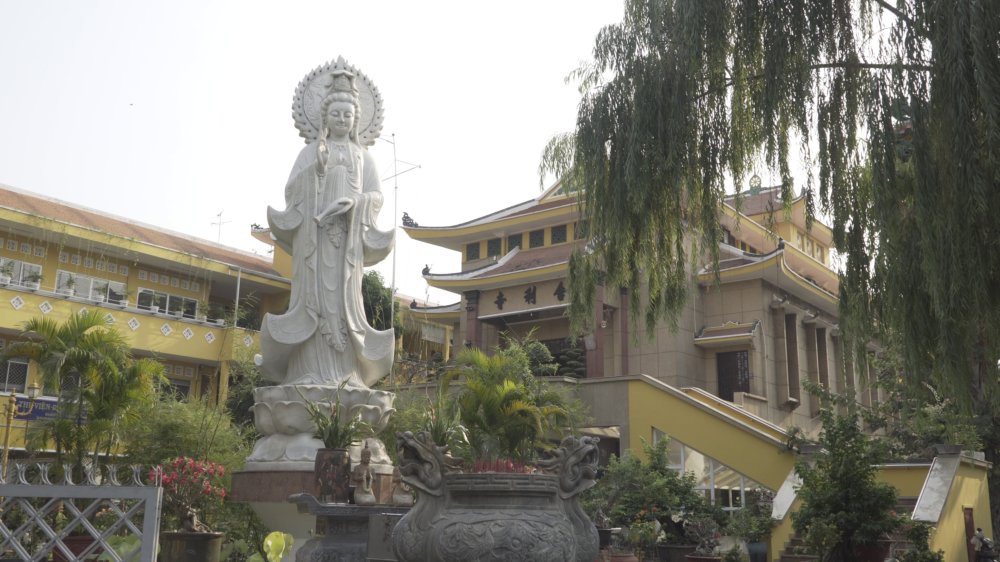

Phat Diem is what happens when a faith adopts the architecture of the place that receives it. Raised in the late nineteenth century in the coastal province of Ninh Binh under the direction of a Vietnamese priest, the cathedral complex rejects the Gothic revival that European missions exported almost everywhere else. Instead it borrows the language of the Vietnamese communal house and temple: low sweeping roofs with upturned tiled ridges, courtyards and gateways in sequence, a broad water basin in front of the ensemble, and a squat stone bell tower, the Phuong Dinh, that reads at first glance as a temple pavilion. Inside, enormous ironwood columns carry the roof over a nave lined with red and gold lacquerwork, and the sanctuary is furnished in a manner closer to Vietnamese ritual joinery than to European liturgical fittings. Stone chapels stand around the main church. The film records the complex in 4K and treats it as a case study in the encounter between Catholic practice and Vietnamese building tradition, of clear interest to strands on sacred architecture and religious history.