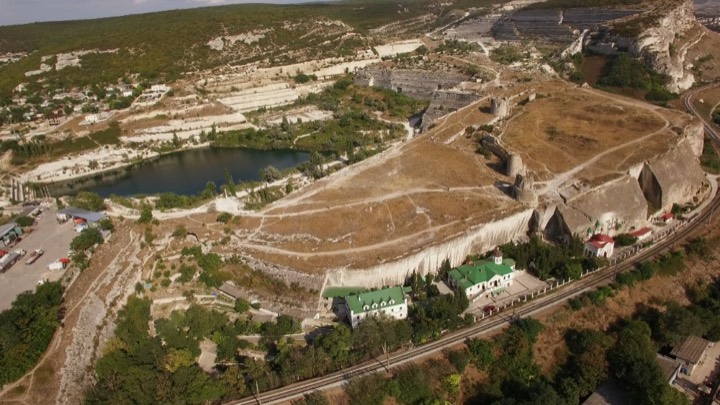
The Inkerman Cave Monastery of Saint Clement
Cut directly into the rock face near Sevastopol, the Inkerman monastery holds chapels and cells within the cliff, with the remains of a fortress on the plateau above.
View details →

Cathedrals, monasteries and churches of Russia and Crimea, from Moscow and Saint Petersburg to Kazan, Pskov, Novgorod, Kizhi and the Solovetsky Islands.
39 programs
Cut directly into the rock face near Sevastopol, the Inkerman monastery holds chapels and cells within the cliff, with the remains of a fortress on the plateau above.
View details →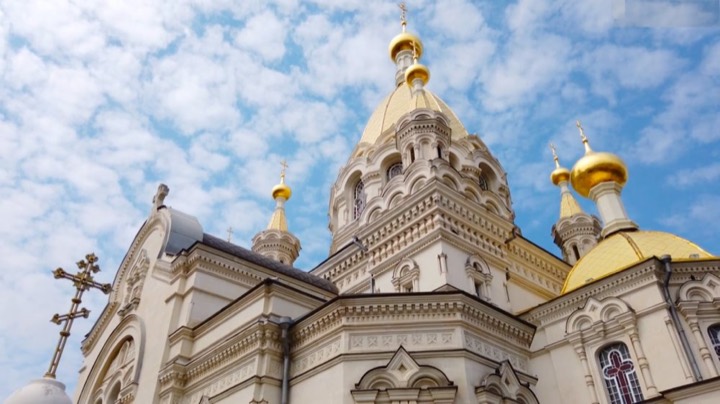
Dedicated to the Protection of the Mother of God, this Crimean cathedral combines the picturesque massing of the Russian revival with an interior of icons, gilding and candlelight.
View details →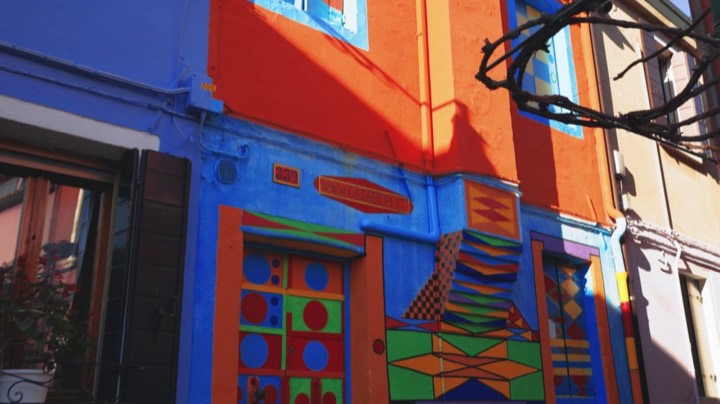
Dedicated to Prince Vladimir, whose conversion tradition situates in Crimea, this cathedral combines a monumental neo-Byzantine exterior with a solemn, marble-lined interior.
View details →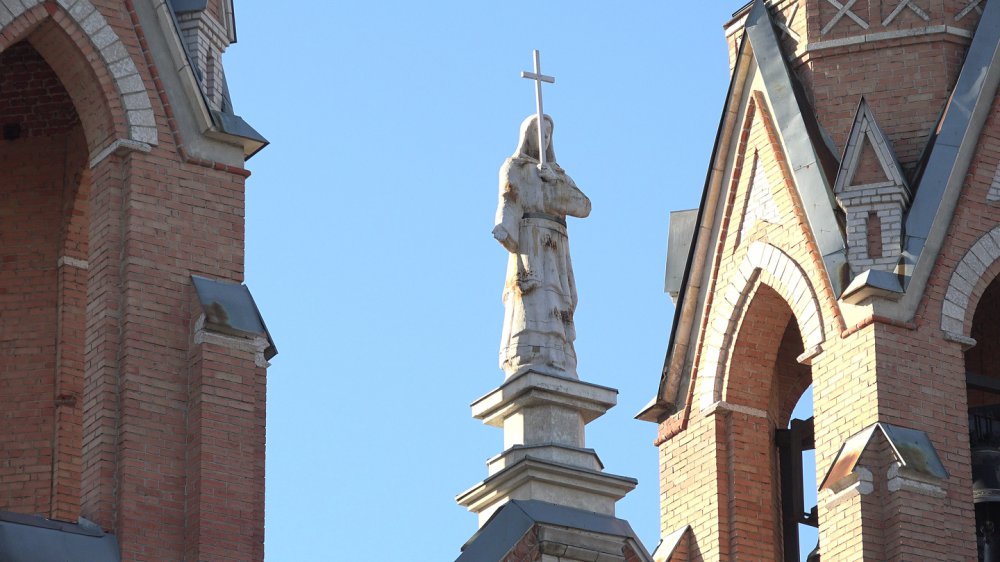
Founded at the end of the fifteenth century in the forests between Lakes Ladoga and Onega, this monastery grew from a hermitage into one of the great spiritual centres of the Russian north, composed of two adjoining walled complexes.
View details →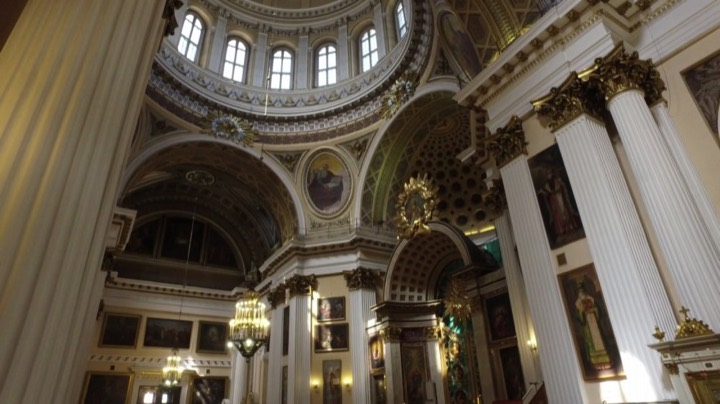
Founded by Peter the Great in 1710, the Alexander Nevsky Lavra holds the relics of the prince who defended Novgorod, a neoclassical cathedral and the cemeteries where Dostoevsky, Tchaikovsky and Glinka are buried.
View details →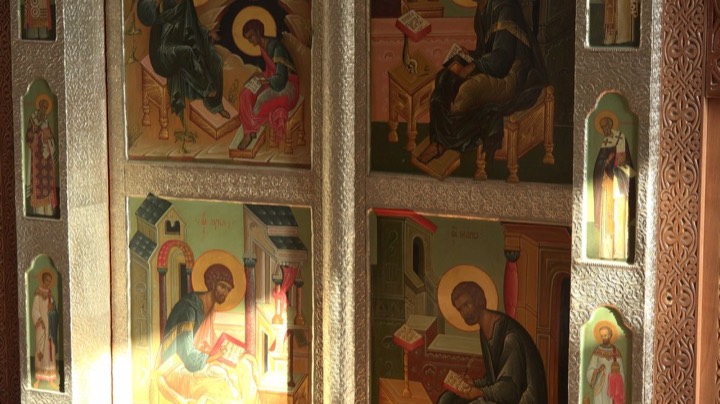
One of the historic monastic centres of northern Russia, the Alexander-Svirsky Monastery preserves churches, a bell tower and conventual ranges within its enclosures, and has recovered an active community after the Soviet decades.
View details →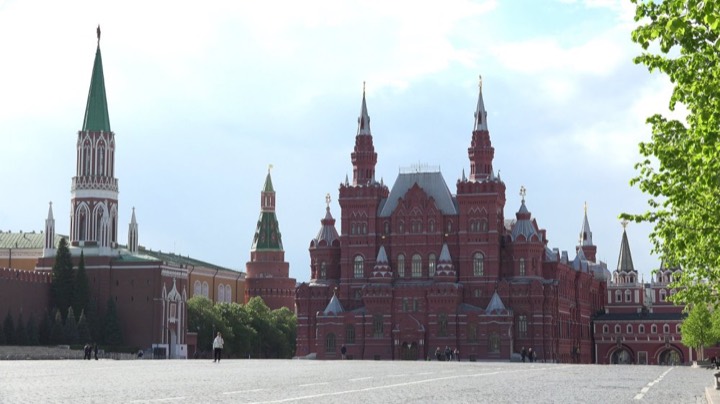
Overlooking the Tvertsa river in the old trading town of Torzhok, the monastery of Saints Boris and Gleb is by tradition among the earliest founded in Russia. Its neoclassical cathedral and bell tower dominate the town's skyline.
View details →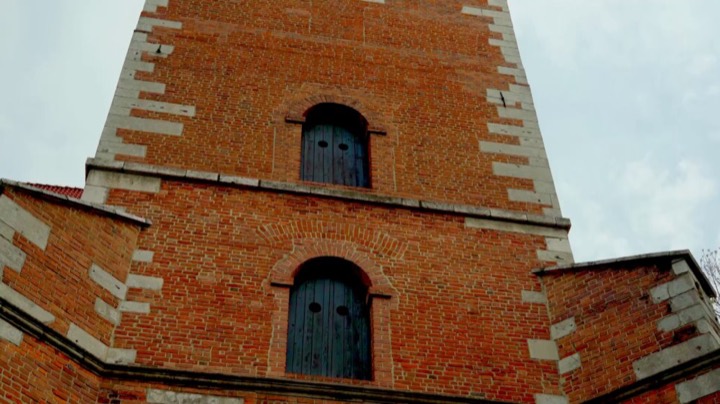
On the bank of the Moskva River stands the largest Orthodox cathedral in Russia. Built in the 19th century to commemorate the defeat of Napoleon's invasion, demolished under Stalin in 1931 and rebuilt in the 1990s, it is a monument to memory as much as to faith.
View details →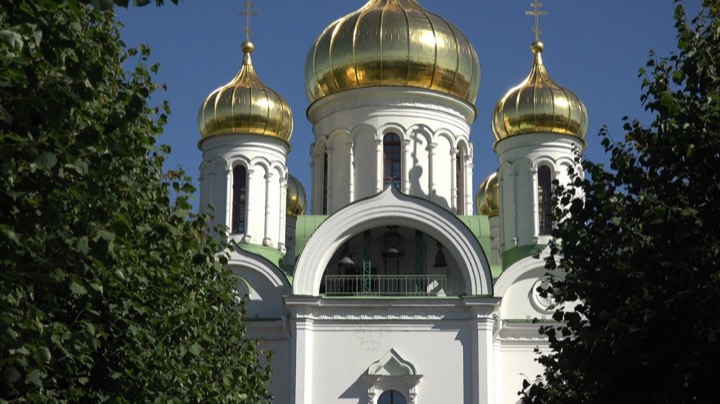
Dedicated to Saint Catherine, this Russian cathedral gathers the elements of a working place of worship: a marked facade in the streetscape, a nave shaped for liturgy, icons, candlelight and the daily rhythm of a congregation.
View details →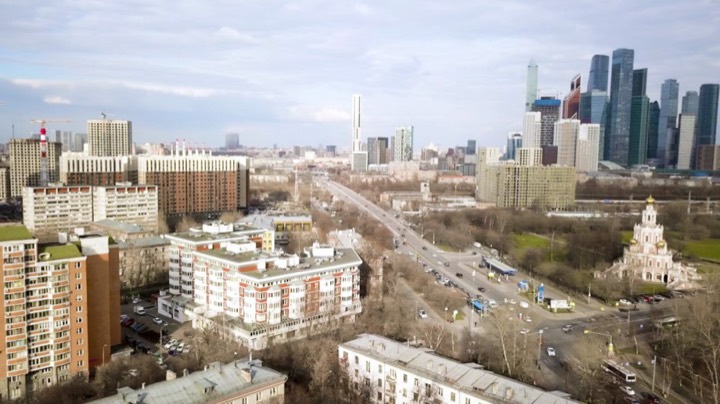
Saint Spyridon, bishop of Trimythous in Cyprus, is honoured throughout the Orthodox world. This Russian church dedicated to him is filmed as a working sanctuary: facade, nave, icons and the quiet choreography of worship.
View details →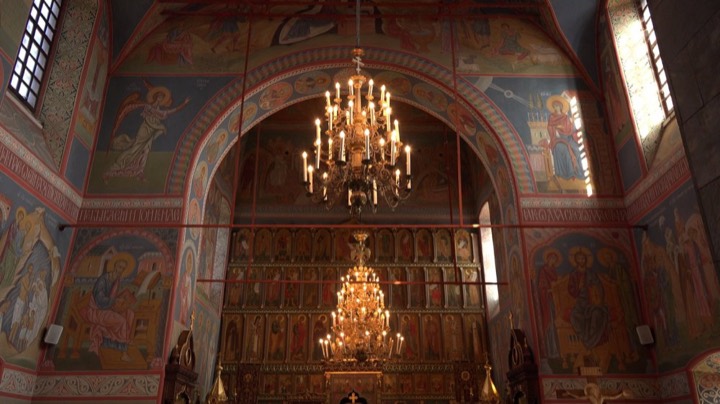
Built in 1532 in the royal estate of Kolomenskoye, this white church was the first masonry building in Russia crowned with a tented roof. Its soaring silhouette above the Moskva River is inscribed on the UNESCO World Heritage List.
View details →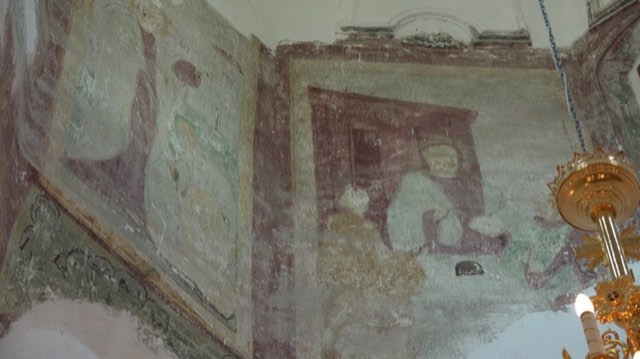
Raised in Moscow at the end of the 17th century for the Naryshkin family, this church of red brick and carved white stone is the emblem of the style that bears their name: a tiered, centralised composition of extraordinary decorative precision.
View details →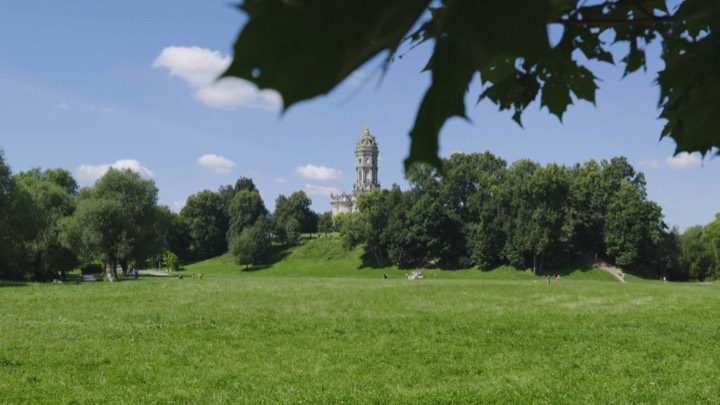
Built at the turn of the 18th century on the Golitsyn estate south of Moscow, this white-stone church breaks every local convention: a centralised plan, European sculpture on its walls, and a gilded openwork crown in place of a dome.
View details →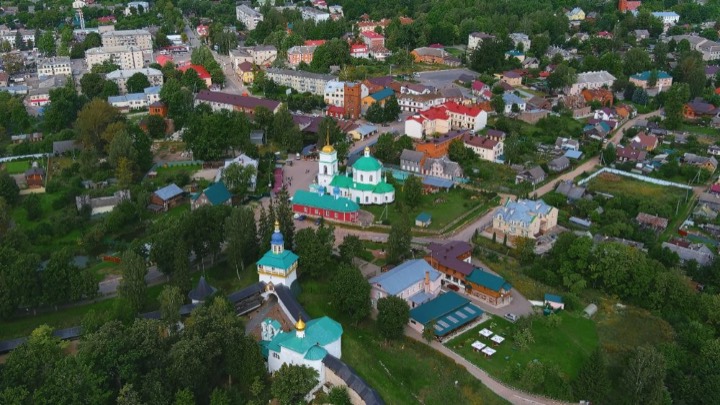
Founded in the 15th century near the western border of Russia, the Holy Dormition Pskovo-Pechersky Monastery is built into a sandy ravine around a network of caves. It is one of the few Russian monasteries that never closed during the Soviet period.
View details →
Founded at the end of the 15th century by Joseph of Volotsk, this fortified monastery west of Moscow encloses cathedral, refectory and cells behind ornate brick walls and towers, its whole ensemble reflected in the surrounding pond.
View details →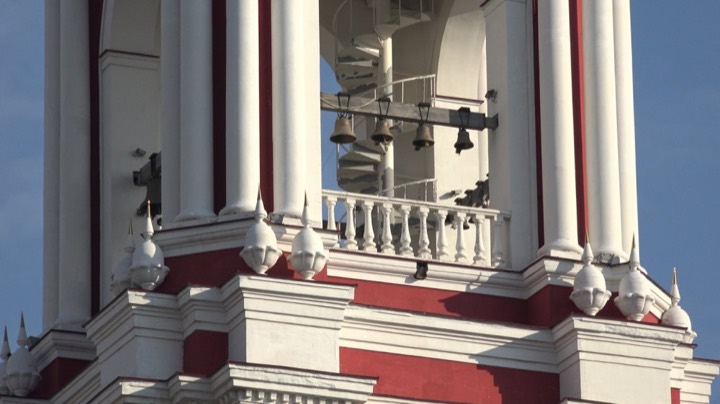
Dedicated to the Kazan icon of the Mother of God, among the most venerated images in Russian Orthodoxy, this cathedral is filmed as architecture and as living devotion: facade and colonnade, nave and side chapels, candlelight and the movement of the faithful.
View details →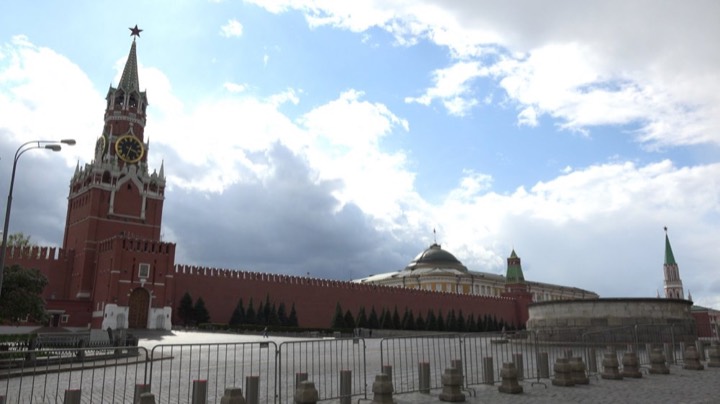
Placed under the patronage of the Kazan icon of the Mother of God, this Russian convent is observed from within: churches and cells inside the enclosure, the ordering of the monastic day, and the work that sustains a community of women.
View details →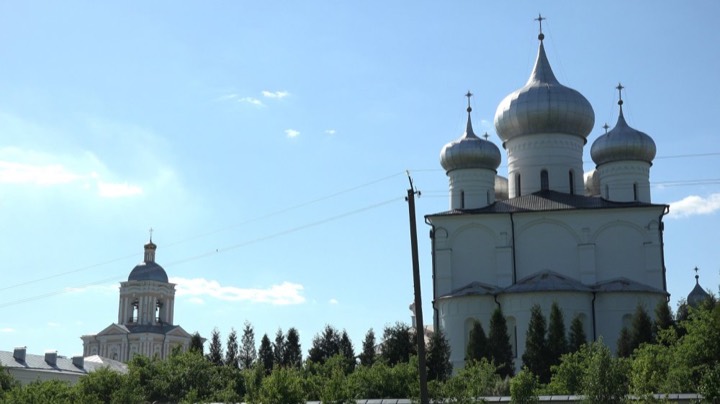
Founded by Varlaam of Khutyn near Veliky Novgorod, this monastery of the Saviour's Transfiguration stands above the Volkhov River. Its white churches and belfry mark one of the great pilgrimage sites of the Russian north-west.
View details →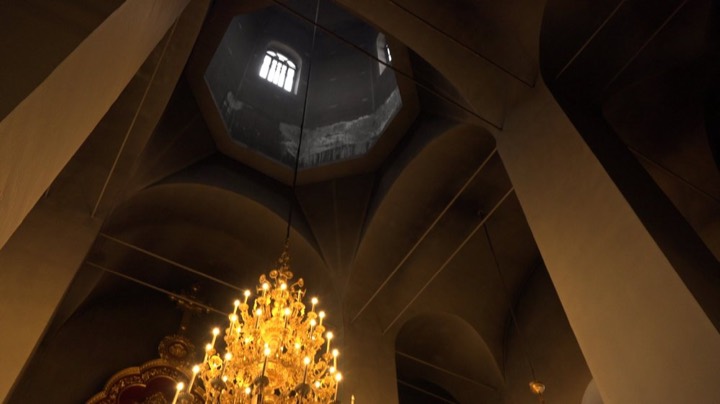
On an island in Lake Onega, the Kizhi Pogost brings together the Church of the Transfiguration and its twenty-two aspen-shingled domes, the Church of the Intercession and a bell tower. A UNESCO World Heritage masterpiece of Russian carpentry.
View details →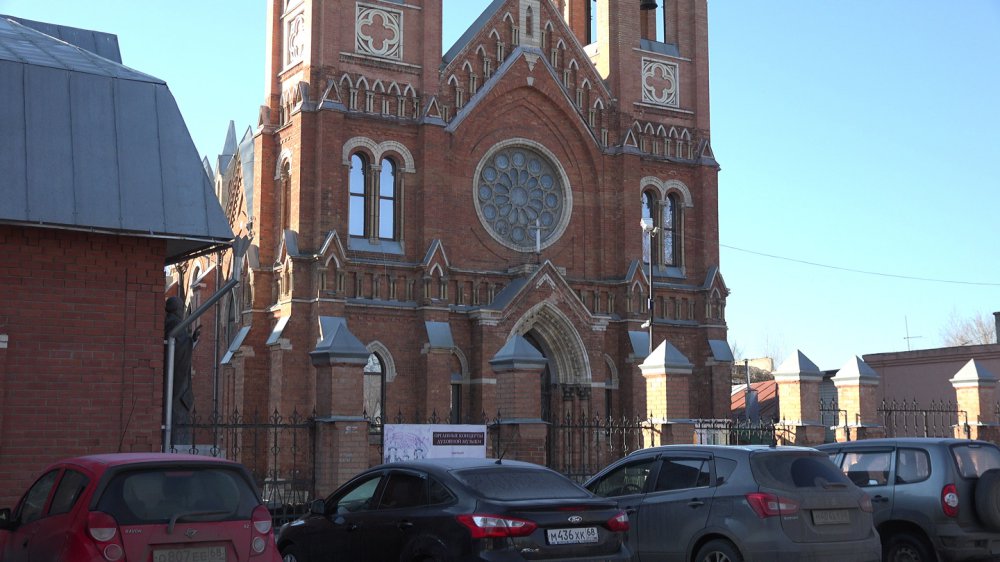
Built at the end of the 19th century in the heart of old Moscow, the Choral Synagogue is the city's main Jewish place of worship. Its classical facade and domed prayer hall speak of a community that endured through a turbulent century.
View details →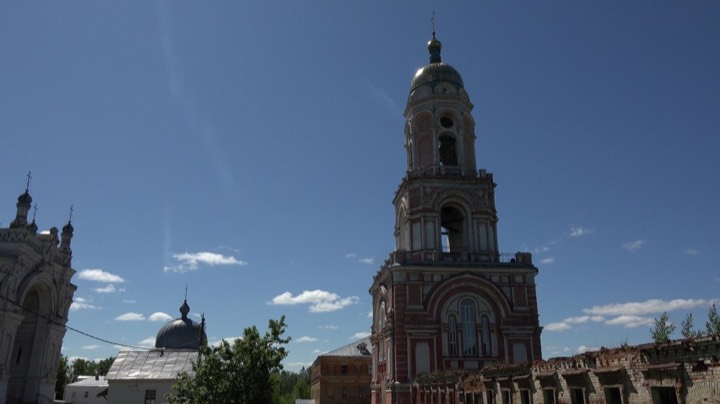
Founded in the 14th century by Dmitry Donskoy in memory of the victory at Kulikovo, this monastery near Moscow is known for its vast Transfiguration Cathedral and the crenellated fantasy of its so-called Palestine Wall.
View details →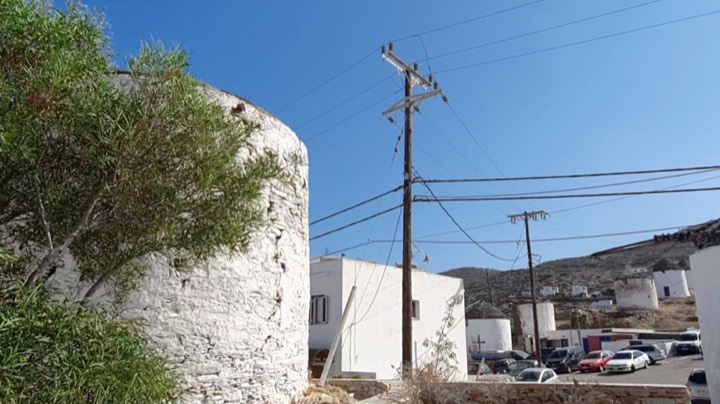
On Stolobny Island in Lake Seliger, the Nilov Monastery grew from the retreat of the hermit Nil. Its neoclassical cathedral, quays and colonnades ring the shoreline, making it one of the most striking water-bound ensembles in Russia.
View details →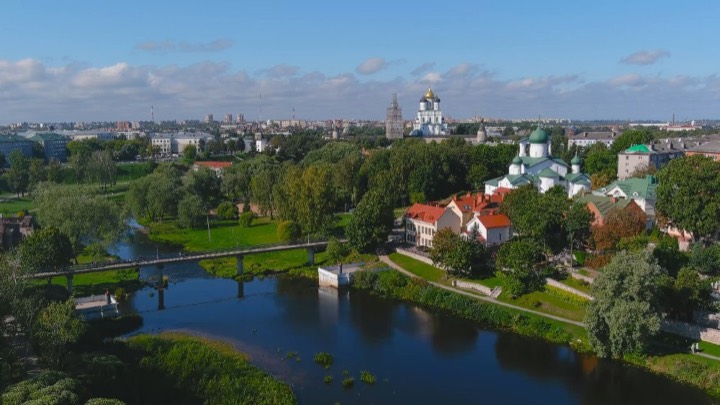
On the Velikaya River, Pskov is one of the oldest cities in Russia and the home of a distinctive architectural school. Its whitewashed churches with their squat domes and open belfries are inscribed on the UNESCO World Heritage List.
View details →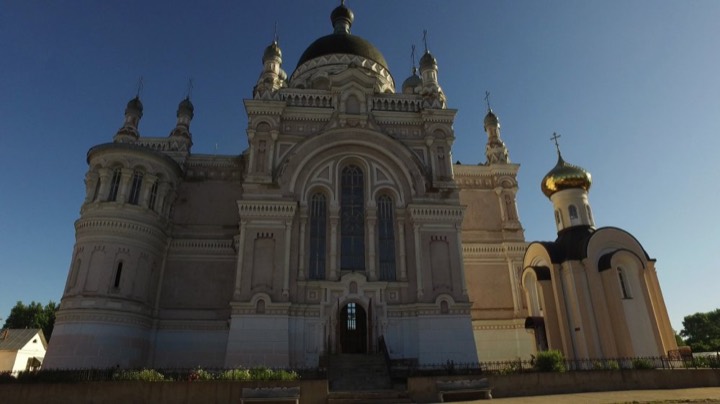
Set among pine forest beside a lake west of Kazan, the Raifa Monastery is one of the principal Orthodox sites of Tatarstan. Its coloured churches, bell tower and enclosure walls face the water in one of Russia's most photogenic monastic settings.
View details →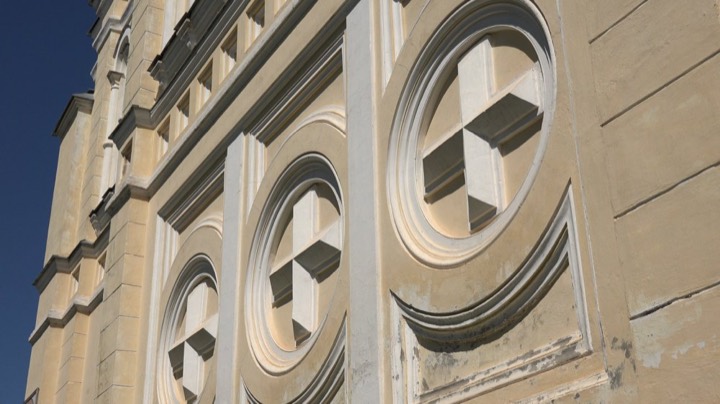
North-west of Rostov Veliky, the monastery of Saints Boris and Gleb is enclosed by powerful walls and towers. Within stand its churches, a gate belfry and the cell associated with Irinarch the Recluse, still a place of pilgrimage.
View details →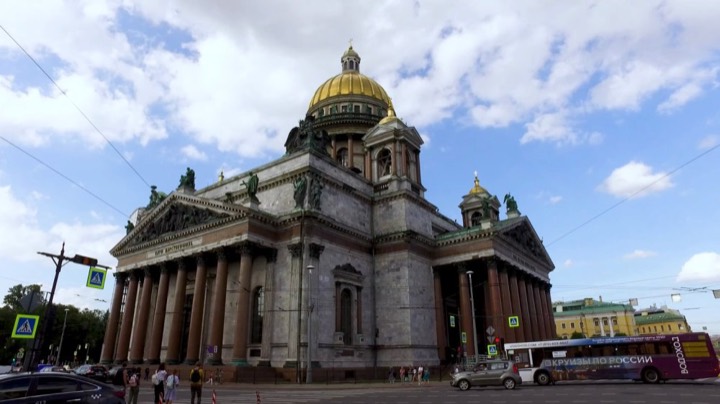
Designed by Auguste de Montferrand and built between 1818 and 1858, Saint Isaac's Cathedral is the largest church in Saint Petersburg. Its granite colonnades, malachite and lapis columns and gilded dome make it a landmark of imperial ambition.
View details →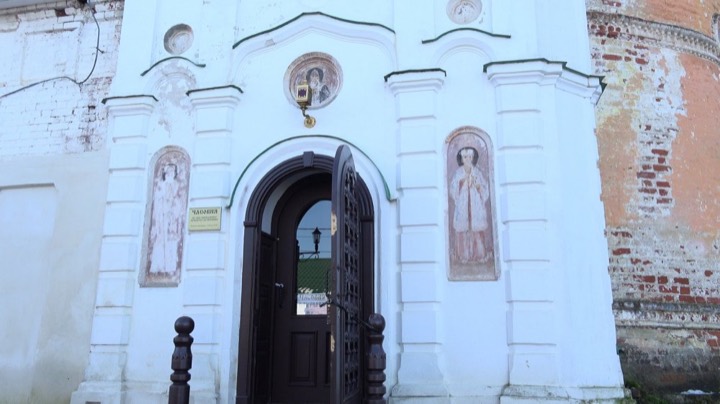
Founded at the end of the 14th century by Savva, a disciple of Sergius of Radonezh, this monastery above Zvenigorod grew under royal patronage into a walled ensemble of churches, palaces and towers overlooking the Moskva valley.
View details →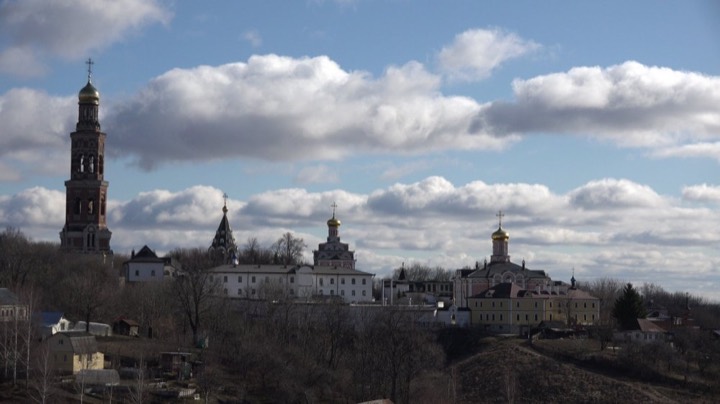
On the Solovetsky Islands in the White Sea, a monastery founded in the 15th century built walls of colossal boulders against the Arctic light. A UNESCO World Heritage site whose 20th-century history as a labour camp remains inseparable from it.
View details →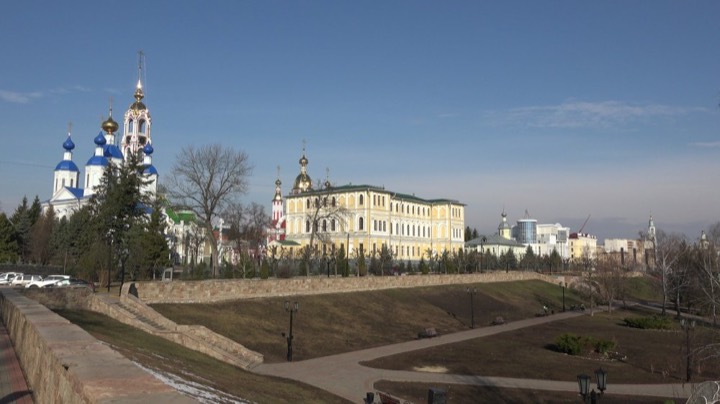
On the Volkhov near Veliky Novgorod, the Yuriev Monastery is among the oldest in Russia. Its Saint George's Cathedral, built in the 12th century, rises in austere white masses over the water meadows toward Lake Ilmen.
View details →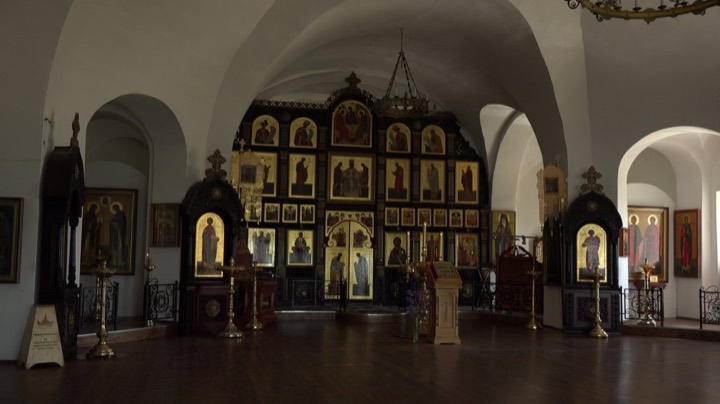
Dedicated to the Ascension, this Russian cathedral is filmed as architecture and as living liturgy: the vertical drive of the exterior, the ordering of the nave, the icon screen, and the light that shapes the interior through the day.
View details →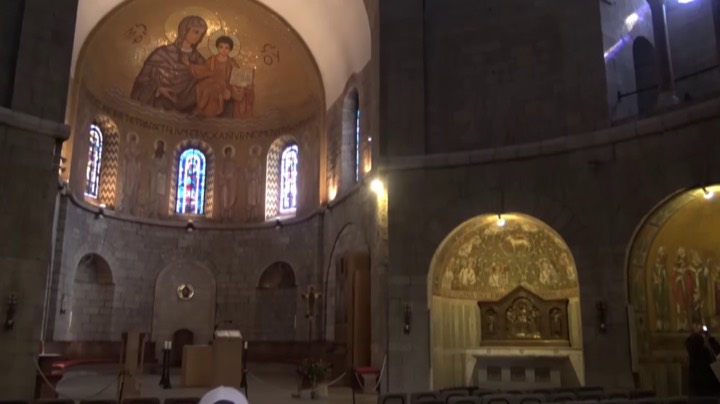
The Dormition of the Mother of God is the dedication of many of Russia's principal cathedrals. This one is filmed with attention to architecture and worship: white walls and domes outside, icons, gilding and candlelight within.
View details →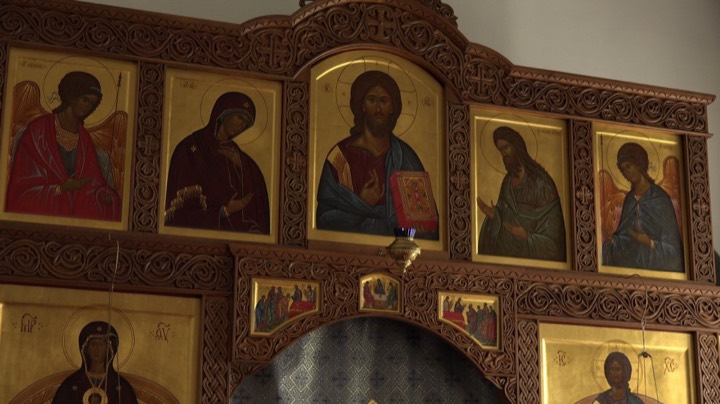
In the historic centre of Moscow, this church is dedicated to Saint Vladimir, the prince whose conversion opened the Christian history of the Rus. A place of worship set within a dense and much-layered urban fabric.
View details →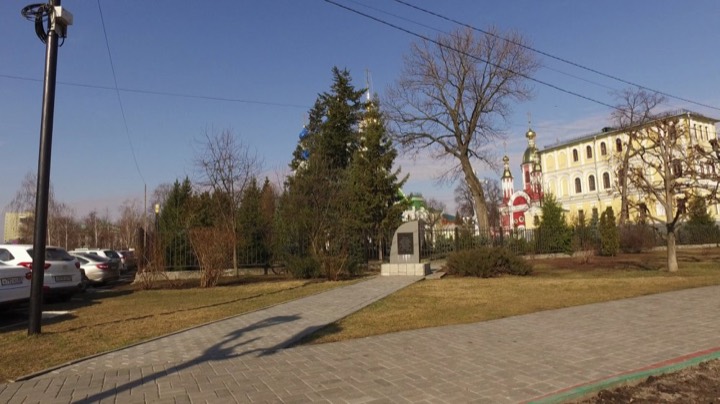
In the provincial city of Tambov stands a Roman Catholic church, a reminder that Catholic communities have long been part of the Russian religious landscape. Filmed as architecture, as sacred space and as a living parish.
View details →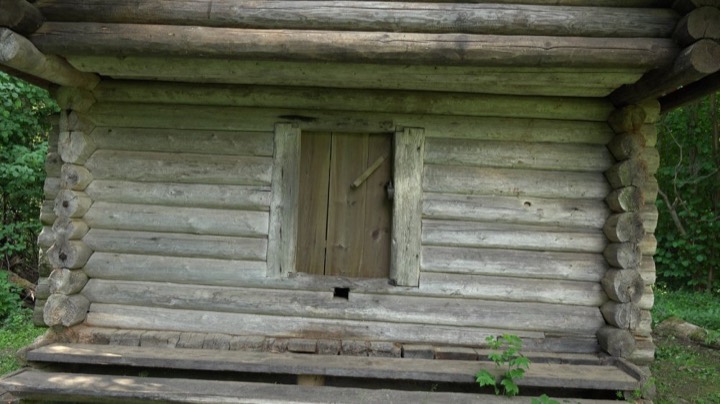
One of the great neoclassical cathedrals of Saint Petersburg, the Trinity Cathedral is instantly recognisable by its deep blue domes strewn with gilded stars, rising above a quarter long associated with the imperial guard.
View details →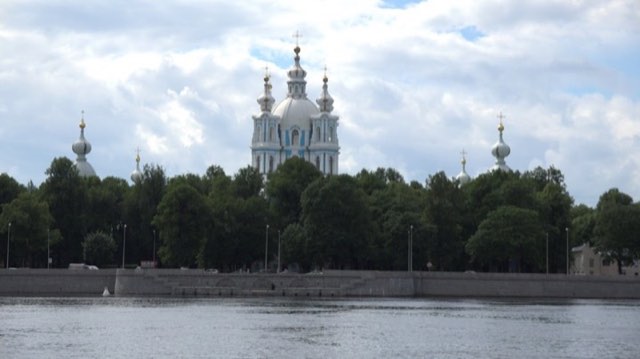
Built in the early 20th century at Tsarskoye Selo for the imperial family, this cathedral revives the forms of medieval Russian architecture: white walls, a single great dome and carved portals, in a deliberate return to national tradition.
View details →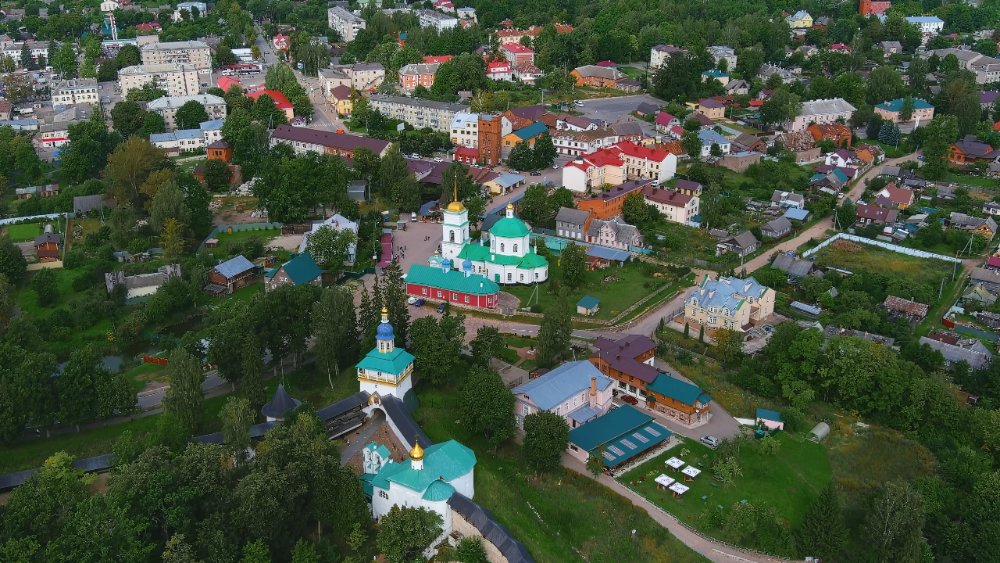
Cathedrals of the Dormition stand at the heart of many Russian cities and monasteries. This one is filmed with equal attention to its architecture and to the worship that fills it: facades and domes, icon screen, chant and candlelight.
View details →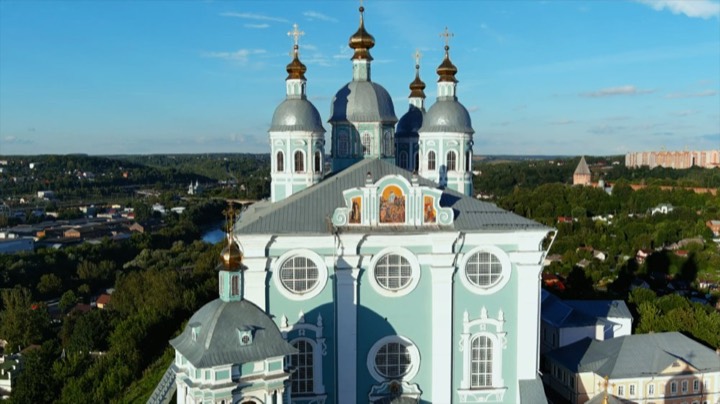
In open country south of Moscow, a walled hermitage gathers churches, bell tower and monastic quarters into one compact ensemble. Closed under Soviet rule and rebuilt by the community living there today, it is filmed as a working house of prayer rather than a monument.
View details →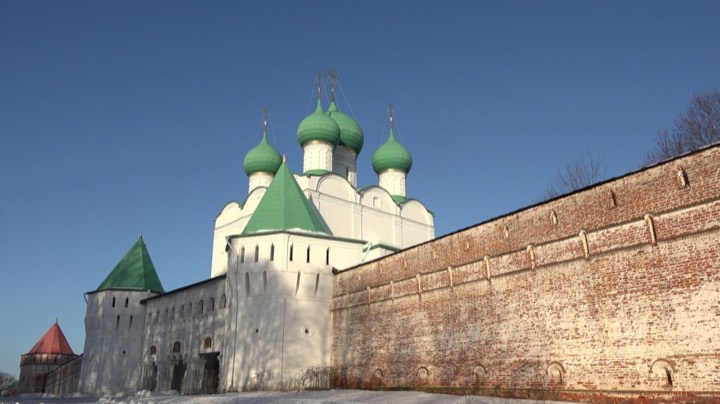
A monumental classical church in eastern Moscow, the Epiphany Cathedral at Yelokhovo served as the patriarchal cathedral through the Soviet decades. Its five domes, gilded iconostasis and venerated relics make it one of the capital's essential Orthodox sites.
View details →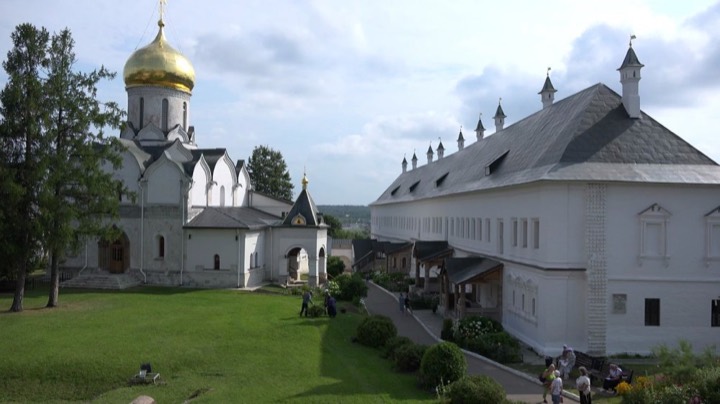
Set on a wooded hill above Zvenigorod, this fortified monastery holds one of the oldest surviving stone churches of the Moscow lands. Royal favour turned a hermitage into a walled residence, complete with tsar's palace and tsarina's chambers.
View details →Tell us about your platform and your territories. Our sales team replies within one business day, with screeners and a proposal.
Contact